In the bustling city of Bengaluru, where every nook and corner tells a story, one individual is grafting his way to making a difference with his community civic welfare initiatives. Born and raised in this vibrant metropolis, his story bears testament to the spirit of community living and civic responsibility, leading to the creation of Reap Benefit – an organisation that empowers young people to turn problem-solvers for local issues.
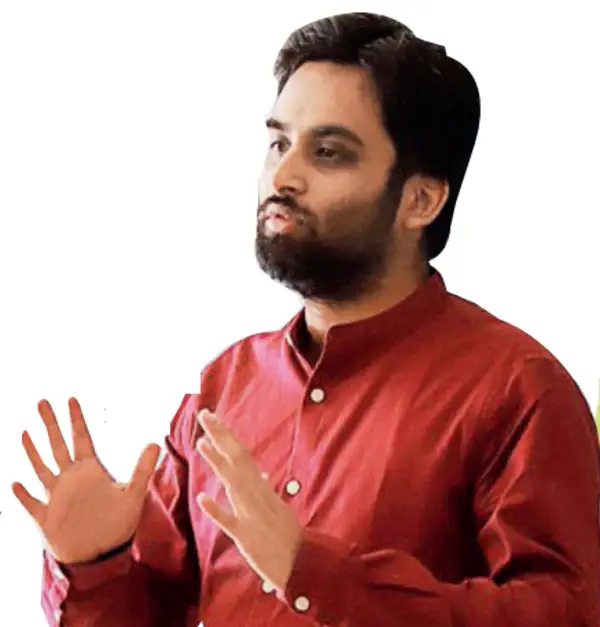


In 2011, he participated in an event organised by Ashoka Innovators for the Public, where they met Gautam Prakash, an old Bangalorean and Boy Scouts enthusiast. Their shared passion for community involvement led to the creation of Reap Benefit.
“We were at Brahmin’s Cafe in Basangudi when we decided that everyone should reap the benefits [of a cleaner environment],” Dantewadia recalled.
Reap Benefit was registered in 2013, but its activities had started in 2011, engaging young people in solving real-world problems of their communities.
“We work with people from the age of 12-13 till 23. The whole idea is to get them into a decade-long experience of solving local issues,” he said.
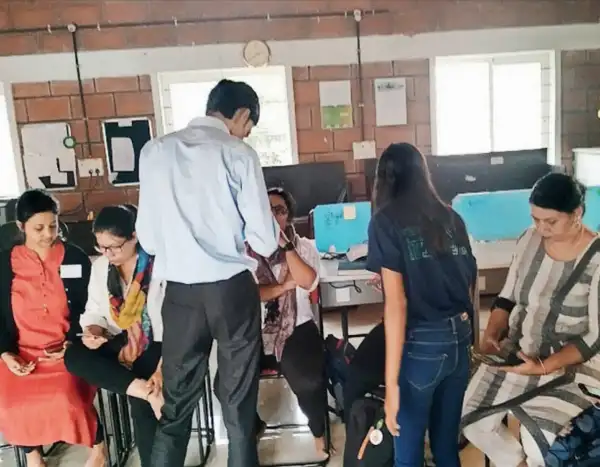
For instance, at a govt school in JP Nagar, they developed India’s first low-cost, waterless urinal made from discarded PET plastic bottles. “The boys didn’t have urinals, and the place would stink,” he recalled. “So, we created a solution that used minimal water and yet improved hygiene.”
The idea was never to be preachy, Dantewadia emphasised. “It was about building hands-on skills and fostering a desire to solve problems.”
Initially, Reap Benefit worked directly with schools to reach young people. Over time, their model evolved
into including technology platforms, chatbots, and collaborations with govts. “We have worked with about 150,000 young people directly,” he told TOI.
One of Reap Benefit’s recent initiatives is SolveCon, a gathering of young changemakers in Bengaluru. At SolveCon, young people present the problems they have solved and receive mentorship.
Despite all its success and growth, Reap Benefit has faced its share of challenges, too. For instance, Bengaluru has not had a local councillor for almost five years, complicating efforts to address civic issues. Reap Benefit tries to provide support and guidance when young people encounter obstacles.
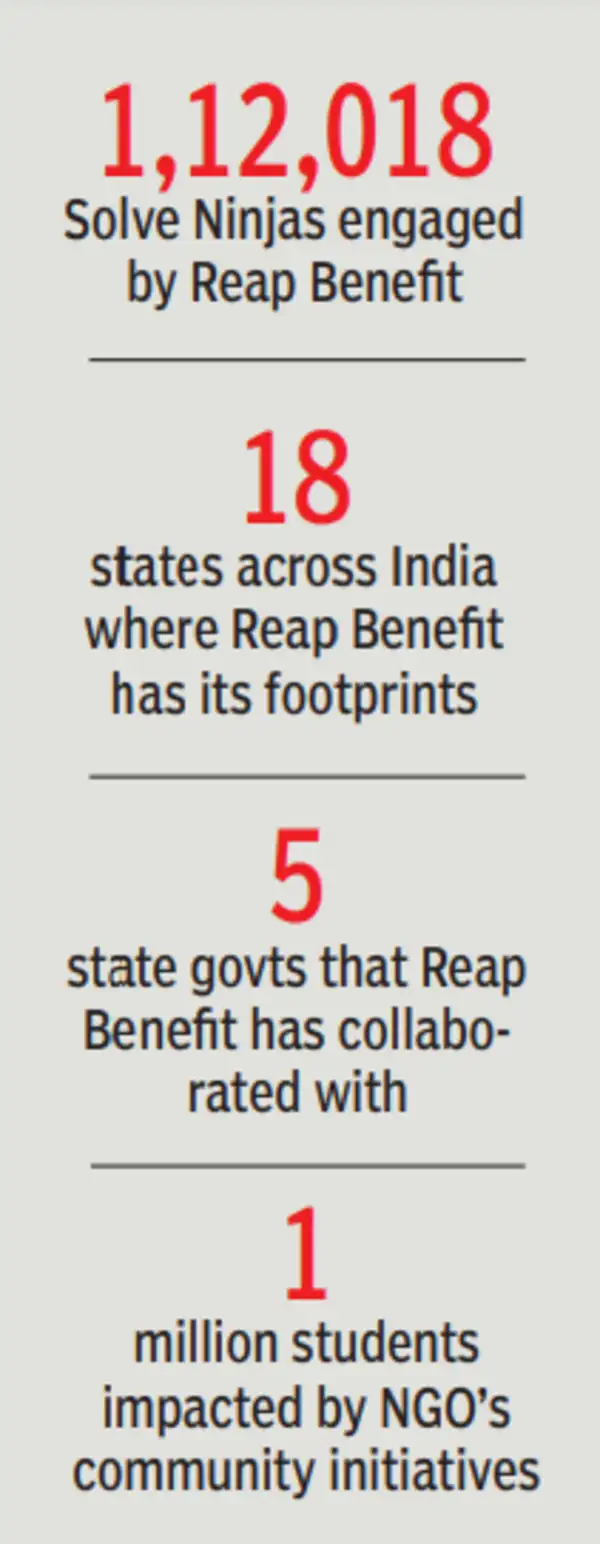
“Our vision is to build a bottoms-up movement of young citizens owning their neighbourhoods,” he affirmed. Reap Benefit has engaged 112,018 Solve Ninjas across 18 states in India, focusing on climate hotspots. The organisation has collaborated with five state govts, impacting more than one million students through the integration of their model into local governance and education systems.
Notable Solve Ninjas like Hardeep Singh, who mobilised farmers to prevent stubble burning across 10,500 acres in Punjab; Priyanka Kumari, co-founder of SOLVE NINJA Gram Chetna Andolan, who has mobilised 2,000 citizens to address water crisis in rural UP; and Kaushik Ravi, who helped significantly reduce water wastage in Trichy, exemplify the impact of Reap Benefit.
In the next five years, Reap Benefit aims to create a million first-mile climate and civic change agents who can solve local issues related to water, waste, sanitation, and air quality. The mission is to enable 10 million youths with 21st-century skills by 2030 through engagement in climate and civic action.
The organisation, Dantewadia said, also places strong emphasis on datadriven solutions. It encourage its Solve Ninjas to collect and analyse local data before proposing solutions — a scientific approach that has led to more effective and sustainable interventions across communities. Their mobile app has helped young activists connect and share solutions across different cities.